How UWCSEA’s Concept-Based Curriculum Mobilises Learning for Peace
Erin Withhoft, Head of Curriculum Development And Research, UWCSEA
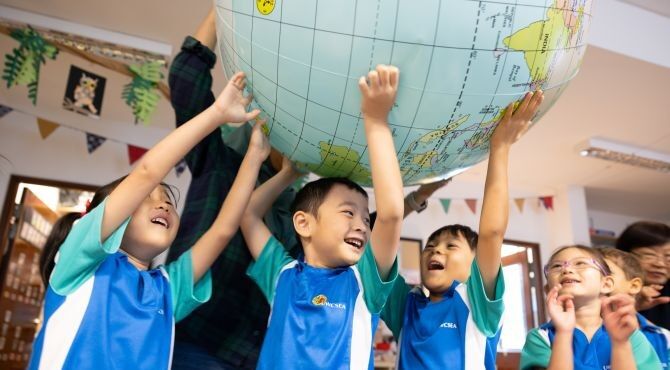
27 February 2026The UWCSEA experience is about students weaving together their knowledge, skills, understandings, and dispositions from the learning programme and mobilising their learning in complex, real-world situations in service to the UWC Mission. As a College, we have taken the mission—to make education a force to unite people, nations and cultures for peace and a sustainable future—and written a curriculum that calls our community to action. That is why we design concept-based curricula to move beyond content and to focus on ensuring students gain deep understanding and are equipped to take purposeful action.
What does “Mission to Action” look like in a concept-based curriculum?
Let’s take “peace” and examine how the curriculum develops this concept into meaningful action. Peace education is woven through many parts of the written curriculum and does not exist in isolation from other areas of learning. It is part of “Service, Sustainability, and Peace (SSP)” through which students develop the knowledge, skills, values, and dispositions to become peacebuilders. From K1 to Grade 12, students explore different types of peace and conflict, examine ways to build peace for themselves and others, and analyse the role of power and governance in sustaining peace.
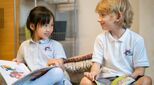
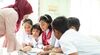
Example: In Grade 2, students might explore the conceptual understanding that “sustainable futures depend on positive peace.” They begin by defining what peace means to them and then explore the distinction between positive peace, “the attitudes, institutions, and structures that create and sustain peaceful societies”, and negative peace, or “the absence of violence or fear of violence.” Through stories, role-play, and discussion, they learn that peace is not only the absence of conflict but also the presence of fairness, empathy, and respect. |
Intercultural understanding underpins peacebuilding
Peacebuilding in our world, however, never exists in isolation; it is underpinned by intercultural understanding, and therefore both are central to our curriculum. Students develop intercultural understanding in the Personal and Social Education (PSE) curriculum. They learn to recognise that individuals have unique preferences, experiences, and identities that shape who they are. They learn to foster respect and appreciation for diversity and to understand how power dynamics, privilege, and oppression operate in the world around them. Through active listening, empathy, and compassion, students take action in support of inclusivity, equity, and social justice, while honouring the fluidity and diversity of identities and cultures.
Example: We have created interdisciplinary courses such as UWC Perspectives, within the Grade 9 and 10 Programme, which explicitly draw on curricula from Service, Sustainability, and Peace as well as Personal and Social Education. UWC Perspectives empowers students to take informed and purposeful action by critically evaluating multiple perspectives. Through inquiry and reflection, they deepen their understanding of global issues and strengthen their capacity as changemakers committed to building sustainable and peaceful futures. |
Digital literacy is a requirement for peacebuilding
In today’s world, peacebuilding also extends beyond face-to-face interactions, which demands that students learn to engage ethically and collaboratively in digital spaces. This happens through our Digital and Information Literacy (DIL) curriculum. They explore how to seek and evaluate information, negotiate differing viewpoints, and build consensus online. They also learn how digital tools can empower advocacy and outreach, enabling individuals and communities to stand up for their beliefs and drive meaningful change. DIL, along with SSP and PSE, is interdisciplinary. It can be incorporated into other areas of learning and is the responsibility of all teachers at UWCSEA.
Examples:In Middle School, students examine the understanding that “individuals can help resolve unproductive conflict.” Teachers embed this idea across subjects and daily routines, whether through classroom agreements, restorative practices, or collaborative group work. When conflict arises, students learn to reflect on their actions, communicate effectively, and restore relationships. These are not add-ons to the curriculum; they are deliberate and essential parts of what it means to learn and live the UWC Mission.In Humanities, students examine systems of power, governance, and conflict through multiple lenses. They learn to connect historical and contemporary events, analysing how peace is built, challenged, and sustained across different societies. Whether exploring revolutions, migration, or global cooperation, students come to understand that peace is both fragile and dynamic, requiring continual effort and shared responsibility. |
The importance of critical literacy
Peace education also requires critical literacy. Starting in Primary School, students learn to evaluate perspectives and assess the credibility of sources, empowering them to navigate complex information landscapes and to consider authors’ intent and purpose. In Middle School, students deepen their understanding of societal power structures and are encouraged to engage proactively with issues of justice and inequality. By Grades 9 and 10, students use critical thinking to evaluate an author’s intentions, make inferences, and construct meaningful arguments. They explore how texts, shaped by historical, cultural, and social contexts, challenge beliefs and values related to conflict, fostering empathy, moral reflection, and action.
In short, peace is everywhere in the written curriculum, woven through every subject, discipline, and strand.


Find out more about the Think Global People and Think Women community and events.
Subscribe to Relocate Extra, our monthly newsletter, to get all the latest international assignments and global mobility news.Relocate’s new Global Mobility Toolkit provides free information, practical advice and support for HR, global mobility managers and global teams operating overseas.
©2026 Re:locate magazine, published by Profile Locations, Spray Hill, Hastings Road, Lamberhurst, Kent TN3 8JB. All rights reserved. This publication (or any part thereof) may not be reproduced in any form without the prior written permission of Profile Locations. Profile Locations accepts no liability for the accuracy of the contents or any opinions expressed herein.