New research shows Industry needs to double down on tackling wellbeing and workplace stress
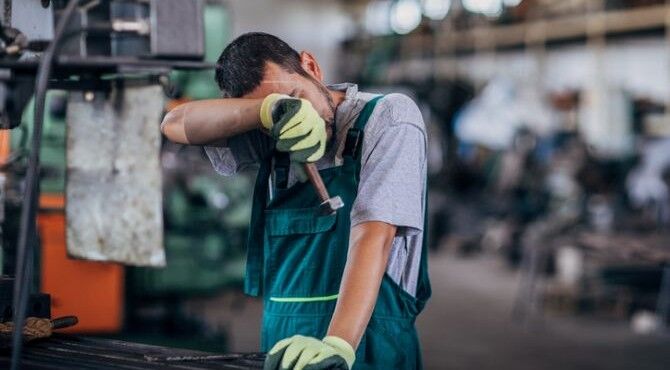
Britain’s manufacturers are world leaders in tackling overall health & safety but need to step up efforts to address the specific issues of psychological health such as wellbeing and stress in the workplace according to new research.
Credit:South_agency
25 February 2026
Government urged to implement Mayfield Review recommendations
The research, conducted independently among both senior decision makers and employees across manufacturing, reveals a sector that has built world leading and strong foundations on tackling overall health & safety in the workplace.However, while there is strong emphasis on tackling risks associated with issues such as manual handling and, the use of materials and substances, there is currently less emphasis in companies on addressing psychological health. There is also significant divergence between the perceptions of leaders and the experience on the ground of those of the workforce which is leading to lower morale, increased absence and lower productivity.While manufacturers have activity in place such as policies, procedures and risk assessments, many employees are reporting these are not consistently understood or experienced. Where risk assessments are carried out, not everyone sees the implementation while employees are reporting these is a lack of awareness of what wellbeing policies include.Almost a third of companies also report they don’t provide an Employee Assistance Programme. This may be due to lack of awareness of these programmes or the cost to business. However, with Statutory Sick Pay from Day 1 coming in from day one, employers may find that the costs of not offering more of these types of programmes is far greater than the cost of employees being off sick. Official data estimates this will cost business £400m a year.The research comes at a time when the latest data shows that 1.9 million people are suffering from work related ill health in 2024/25, an increase of 200,000 from the previous year which was entirely due to increases in stress, depression and anxiety.Read related articles
- Five key workplace wellbeing trends to watch in 2026
- Wellbeing in business: How to help your teams manage stress and burnout
- Bringing wellbeing and humanity back into recruitment
- Wellbeing: What does it embrace and how can it be promoted?
- Psychological safety: Actions and benefits in the workplace
 Commenting, Chris Newson, Director of Environment, Health & Safety at Make UK, said:“The number of fatalities in UK workplaces has fallen consistently fallen, establishing the UK as a global leader in workplace health and safety. This is a significant and hard-won achievement. However, while fatalities remain an important indicator, an over-reliance on them can risk masking wider issues. The data suggests that trends in wellbeing and long-term ill health are worsening with the size of the problem growing, not shrinking. This demands a more rounded approach from companies to workforce health.“Given the societal costs associated with workplace ill health this is also an issue Government cannot ignore. It should now implement the recommendations of the Mayfield Review in full, most notably:
- Make the Health Working lifecycle an accredited standard that employers can measure themselves against.
- Launch a range of funding options to support tangible wellbeing initiatives
- Promote a joined up approach between employers, government & the health service.
About Make UK
Make UK, The Manufacturers’ Organisation, is the representative voice of UK manufacturing.Collectively we represent 20,000 companies of all sizes, from start-ups to multinationals, across engineering, manufacturing, technology and the wider industrial sector. Everything we do – from providing essential business support and training to championing manufacturing industry in the UK and the EU – is designed to help British manufacturers compete, innovate and grow.From HR and employment law, health and safety to environmental and productivity improvement, our advice, expertise and influence enables businesses to remain safe, compliant and future-focused.
Join us at our Scotland event to celebrate International Women's Day


Find out more about the Think Global People and Think Women community and events.
Subscribe to Relocate Extra, our monthly newsletter, to get all the latest international assignments and global mobility news.Relocate’s new Global Mobility Toolkit provides free information, practical advice and support for HR, global mobility managers and global teams operating overseas.
©2026 Re:locate magazine, published by Profile Locations, Spray Hill, Hastings Road, Lamberhurst, Kent TN3 8JB. All rights reserved. This publication (or any part thereof) may not be reproduced in any form without the prior written permission of Profile Locations. Profile Locations accepts no liability for the accuracy of the contents or any opinions expressed herein.