Moving a Family to Amsterdam: Practical Advice on Housing, Wellbeing, and School Continuity
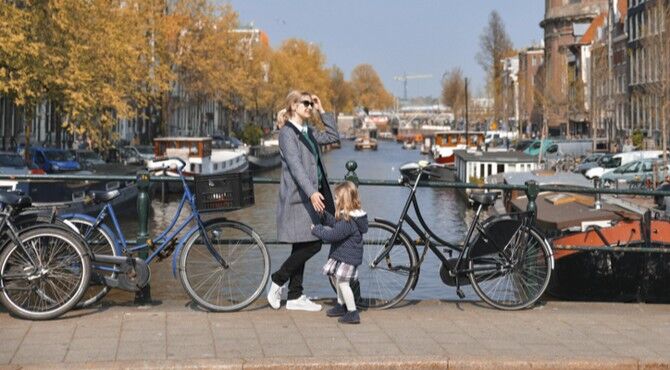
Moving a family to Amsterdam involves far more than booking a removal van and signing a new work contract. While the Dutch capital is safe, well-connected, and a wonderful place to raise children, arriving parents quickly face three urgent priorities: finding a home in a tight rental market, looking after their children’s emotional wellbeing, and keeping their education on track.
1. Timing the Amsterdam Rental Market
In the Netherlands, housing and school decisions go hand in hand, yet many families misjudge how quickly the local property market moves. Amsterdam ranks just behind London in both rental cost and competition, so good preparation makes all the difference.● Aim for the four-week window: On average, it takes around four weeks to secure a rental home. Demand peaks in late summer, when corporate relocations overlap with incoming university students. For a September school start, families should begin their active search in June or July. Looking six months ahead rarely helps, as Dutch rental properties usually come onto the market just a few days or weeks before they are available.● Look beyond the immediate neighbourhood: Amsterdam’s cycle paths and public transport—covering trams, buses, metro lines, and 24-hour free ferries—make getting around straightforward. A 15- to 20-minute bike ride connects almost any part of the city to BSA’s campus in Oud-Zuid, near Vondelpark.● Consider quieter family districts: Almost every area within the A10 ring road is safe and welcoming for children. While Oud-Zuid and neighbouring Amstelveen (a green suburb roughly 20 minutes away by bicycle) are popular choices for expat families, districts such as Amsterdam East offer generous parks and a local feel without the higher prices of tourist-heavy areas. Families who prefer more space outside the city also commute easily from towns like Haarlem via direct bus links.● Factor in local house quirks: Traditional Dutch homes often have very steep staircases, and landlords can be strict about pets—details worth mentioning to an agent early on.2. Managing the Everyday Mental Load of a Move
Parents naturally focus on big tasks like contracts and removals, yet a relocation is really made up of hundreds of small daily changes. Learning a new route to school, figuring out unfamiliar playground rules, and joining new parent WhatsApp groups all take extra mental energy.This extra cognitive load can leave both adults and children unusually tired, particularly neurodivergent family members who rely on familiar routines. Families also tend to go through a clear emotional cycle: an initial burst of excitement upon arrival, followed by a natural dip once everyday life sets in—often coinciding with greyer autumn weather—before long-term stability returns.To ease this adjustment at home, school counsellors suggest a few simple habits:● Keep small routines from home: Holding onto familiar family traditions—such as Sunday morning pancakes or a Friday film night—brings comfort amidst all the change.● Leave free space in the diary: Resist the urge to sign up for every after-school club straight away; quiet downtime helps children process a new environment.● Listen rather than fix: When children share that they had a hard day, listening and acknowledging their feelings works far better than rushing to solve every problem for them.● Give everyone time to adjust: Even when a family arrives on the same flight, each parent and child will settle at a different speed.3. Helping Children Settle and Belong at School
Children learn best once they feel happy, safe, and accepted. Because international moves happen throughout the calendar year, families benefit from a school that welcomes new starters at any point in the term rather than restricting entry to September.Good onboarding also adapts to a child’s age. Younger learners settle well with short introductory visits before their first full day, whereas older pupils build friendships faster through peer buddies and early residential camps.Just as importantly, adults should allow friendships to form naturally. Forced social pairings rarely work; many children prefer to sit back, observe the classroom, and connect in their own time with classmates who share their interests in music, sport, or hobbies. Behind the scenes, an approachable counselling team—offering open-door drop-ins, termly parent workshops, and group check-ins six to eight weeks after a pupil starts—helps ensure quieter students are supported.Supporting parents is equally vital. An active parents' organisation with around 35 interest groups, from running clubs to wine tasting, helps newcomers build a social circle before they even land in the Netherlands.4. Keeping Education Steady Across Borders
For families who move every few years, consistency in the classroom matters. British international schools worldwide share roughly 80% of the same curriculum structure, allowing pupils to transfer between postings without repeating or missing core work.When comparing schools in the Netherlands, HR teams and parents should look for clear quality markers:● Independent inspection: Regular inspections by the UK government inspectorate and an official UK Department for Education (DfE) registration number—a distinction held by just over 300 British schools worldwide—provide reliable proof of academic standards.● Consistent teachers: Keeping the same class or subject teachers throughout the entire school year builds steady relationships and gives parents a clear point of contact. For mid-year arrivals or pupils still building their English fluency, tailored classroom support helps them catch up quickly.● Clear routes to university: Programmes covering GCSEs, A-Levels, the Extended Project Qualification (EPQ), and the Duke of Edinburgh's Award keep higher education options open worldwide. At BSA, around 40% of graduates choose to stay in the Netherlands for university—supported by early subject advice to meet specific Dutch entry rules—while the rest move on to universities in the UK, North America, Australia, and across Europe.When housing plans, emotional support, and school stability work together, families can spend less time worrying about logistics and more time enjoying their new life in Amsterdam.Visit The British School of Amsterdam's Featured School page


Find out more about the Think Global People and Think Women community and events.
Subscribe to Relocate Extra, our monthly newsletter, to get all the latest international assignments and global mobility news.Relocate’s new Global Mobility Toolkit provides free information, practical advice and support for HR, global mobility managers and global teams operating overseas.
©2026 Re:locate magazine, published by Profile Locations, Spray Hill, Hastings Road, Lamberhurst, Kent TN3 8JB. All rights reserved. This publication (or any part thereof) may not be reproduced in any form without the prior written permission of Profile Locations. Profile Locations accepts no liability for the accuracy of the contents or any opinions expressed herein.