Difference and collaboration take centre stage
The CIPD Festival of Work 2026 saw leaders come together to solve their business challenges and people managers explore how to bring out the best in their teams.
22 June 2026
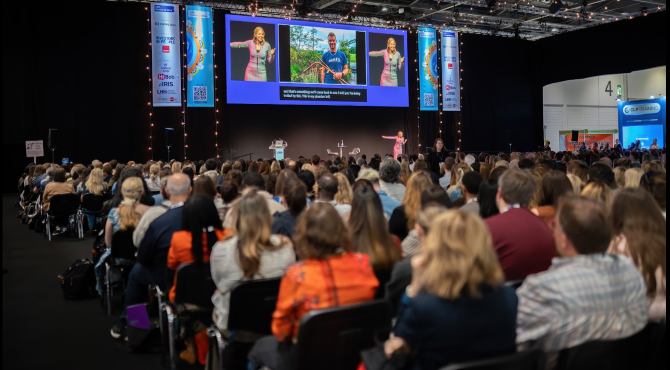
Across two packed days, conversations ranged from AI and workforce planning to employee wellbeing, leadership and skills development. While technology featured heavily, a common thread was that organisations cannot build successful futures without investing in people.The most interesting sessions urged delegates to embrace the ‘power of difference’ to allow people to do their best work. Drawing on her expertise as a biological anthropologist, author and broadcaster, Prof Alice Roberts’ keynote examined how diversity across biology, culture, and lived experience can be a powerful asset.

Subscribe to Relocate Extra, our monthly newsletter, to get all the latest international assignments and global mobility news.Relocate’s new Global Mobility Toolkit provides free information, practical advice and support for HR, global mobility managers and global teams operating overseas.
Difference as power
Roberts stated that innovation, resilience and high performance are all things that can be driven by us as individuals, and that building communities of collaboration allow us all to benefit from more diverse skills and richer ideas.“Evolution shows us that some people just started to run. Then they were better able to exploit resources and cover larger distances. Innovation doesn’t have to be forced on you from the outside, it can come from within, and you can be the instigator of that change,” said Roberts.This power of difference theme was built on in sessions by Tinne Ledwitch-Madsen, head of inclusion, wellbeing and engagement, Post Office, Simon Fanshawe, co-founder, Diversity by Design and Nina Goswami, head of inclusion UK, Clifford Chance who explored how inclusive leadership is much more than being open-minded and how companies stand to benefit.Other sessions looked at how to unlock neurodivergent talent and retain neurodivergent employees, including people with autism, ADHD and dyslexia, through changes to recruitment and workplace practices.A talk by Dr Amy Pressland, head of talent and performance, Benenden Health, shared how menopause experiences should be used to create workplaces where more women can thrive. A handful of sessions also looked at supporting employees at different family life stages, from school-age parenting to childcare and analysed the cost of doing nothing and the ROI behind the most effective support options.Know your people and their habits
Leadership coach Diana Osagie gave an energising speech on how leaders can create real change and asserted that transformational leadership is not about having the right vision or strategy but changing what people do automatically when pressure arrives.“You do not transform organisations by changing strategy. You transform them by changing what people do without thinking. Habits outlast leadership turnover or vision enthusiasm; colleagues get on board as you lead a change in behaviour rather than demand belief.”Understanding the habits of your people is fundamental for transformation, she argued. She challenged leaders to be courageous. To ask difficult questions and face facts in order to reshape their organisation’s response to them.In times of uncertainty, she spoke about how leaders can build trust through predictability and implied that people don’t resist change – they resist uncertainty.Read related articles
- Flexible working: Making modern work actually work
- Bringing wellbeing and humanity back into recruitment
- The Future of Work: Cultivating Innovation and Powering Discovery
- What technology can and cannot replace - the human factor that drives performance
Wellbeing as a business priority
Another focus was wellbeing and how it can no longer be treated as a standalone initiative.A main stage panel chaired by Rebecca Peters, senior policy & practice adviser at CIPD brought together experts from healthcare, policy and business to examine the growing link between employee health and organisational performance.Karen Chummun, deputy director of people, talent & leadership, NHS England, Dr Ian Hesketh, honorary research fellow and Colin Hodgson, director of growth, Reward Gateway|Eden Red, discussed workplace wellbeing and how to build a resilient and high-performing workforce."There is real growing evidence on workplace wellbeing and research on how to measure happiness and what drives happiness. 1 in 2 employees in the workplace are unhappy,” said Hodgson. He shared that happier employees are 12% more productive and less likely to leave an organisation.“Bringing happiness back to the workplace could bring a £334 billion contribution to the economy annually,” he added.Chumman gave the audience some quick wins on how to improve employee wellbeing. An instant win, she suggested, could be to engage and mobilise line managers and C-suite executives on flexible working – a benefit that can easily improve the working lives of employees across all demographics.With sickness absence levels remaining a concern for many employers and increasing numbers of people leaving work due to health-related issues, speakers argued that organisations need a more proactive approach to keeping employees healthy and productive.Rather than responding when problems arise, attendees were advised to embed support throughout the entire employee journey — from recruitment and onboarding through to development, absence management and return-to-work programmes.The panel highlighted the critical role managers play in creating psychologically safe environments where people feel able to speak openly about challenges before they become barriers to performance, as well as rapid access to support and interventions.AI with people at the centre
A popular session in the tech innovation area covered dealing with AI use in recruitment.Andrew Stephenson, director, Dove Nest Group, showed how organisations are using AI to increase productivity in various ways, from drafting job descriptions to screening applications and hiring processes but acknowledged the speed of change. “We’re applying for jobs and AI is deciding who gets them,” he said.CIPD and Omni research found that nearly a third of organisations are using some form of AI or machine learning in recruitment and onboarding. This figure continues to rise and, while many employers report improved hiring efficiency, AI use raises important questions around fairness, trust and risk from candidate quality to privacy and data risks.While acknowledging issues such as bias, he urged delegates to positively embrace the power and productivity of AI tools in a world that is already becoming AI augmented. “If it’s OK for your company to use it, it should be ok for your employees and candidates too.”Focused on efficiency, he called for people to view it as a unique opportunity to push change and unblock time spent doing menial tasks and processes but warned that everything we do with AI should be about enhancing the ability for humans to make better decisions.He warned delegates to not treat AI as just a bit of tech either but more like an agent. “Think long term, invest in the tech. Help it, coach it, guide it. Treat it as a new starter.”Did you know?Only 51% of employees frequently feel happy at work 30% of HR teams currently track happiness within their organisations73% of HR said they provide AI training but only 21% of employees say they’ve received it44% of employees want to progress their career without becoming a managerSource: Bridging the ROI Gap, Reward Gateway | Eden Red |

Find out more about the Think Global People and Think Women community and events.
Subscribe to Relocate Extra, our monthly newsletter, to get all the latest international assignments and global mobility news.Relocate’s new Global Mobility Toolkit provides free information, practical advice and support for HR, global mobility managers and global teams operating overseas.
©2026 Re:locate magazine, published by Profile Locations, Spray Hill, Hastings Road, Lamberhurst, Kent TN3 8JB. All rights reserved. This publication (or any part thereof) may not be reproduced in any form without the prior written permission of Profile Locations. Profile Locations accepts no liability for the accuracy of the contents or any opinions expressed herein.