Study finds fairness concerns in AI hiring are often reframed as risks to manage
Employers adopting AI recruitment tools may be mistaking risk management for fairness, according to new research from King’s Business School.

Credit:Ole_CNX
28 July 2026
AI is increasingly used in recruitment through CV screening tools, chatbots, video interviews, simulations and candidate scoring systems.The study examined how 41 technology experts, HR professionals, AI companies and advisers talked about using artificial intelligence in hiring despite the risk of algorithmic bias.Professor Elisabeth Kelan found that participants did not divide neatly into AI enthusiasts and sceptics. Instead, they moved between two positions that ultimately supported continued adoption.The first, described as “techno-optimism”, presented AI as a way to expose or reduce the biases already present in human hiring. Participants pointed to more representative training data, removing personal identifiers, training assessors and auditing algorithms as ways to make the technology fairer.But when they acknowledged the limits and risks of AI, concern rarely became a reason to reject it. Professor Kelan calls this “techno-hesitation”, where ethical questions about discrimination were reframed as legal, reputational or managerial risks that organisations could control. Rather than disrupting adoption, ethical concerns often became part of the justification for continued use, provided organisations could demonstrate they were managing those risks.
In the interviews, concerns about discrimination were often followed by discussion of audits, legal exposure, brand risk or human review. Importantly, caution rarely translated into opposition to AI hiring. Instead, interviewees generally presented these safeguards as ways to continue using the technology while addressing concerns. The study argues that this pattern can make AI recruitment appear more manageable, even where questions about fairness remain unsettled. “The research suggests that debates about AI hiring are not simply divided between techno-optimism and techno-pessimism. Many participants acknowledged concerns about bias while simultaneously supporting the use of these technologies. What emerged was a form of techno-hesitation, where ethical concerns were reframed as legal, reputational or managerial risks that organisations could manage.”
Elisabeth Kelan, Professor of Leadership and Organisation at King’s Business School For employers, the practical takeaway is to begin with the hiring problem and the fairness test, not the technology. The research suggests that before adopting an AI tool, organisations should be clear about the data and decisions it will influence, how outcomes will be tested across different groups, who is accountable, who can overrule it and how applicants can challenge a decision.For jobseekers, useful questions might include whether AI will be used to screen or score their application, what information will be assessed and whether people remain involved in the decisionmaking process.The paper does not test the accuracy of individual hiring tools or suggest that all uses of AI in recruitment are discriminatory. Instead, it examines how people involved in AI hiring talk about bias, caution and responsibility as the technology becomes more widely used.The research draws on hour-long interviews with participants based in the UK, Europe, the US, Australia and the United Arab Emirates. The paper, Negotiating algorithmic bias: Discourses of techno-optimism and techno-hesitation in AI-mediated hiring,[EK1] is published in Information Technology & People.
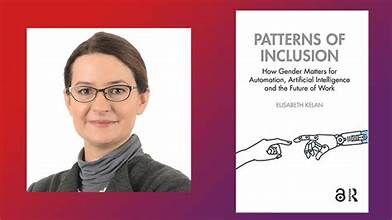 Read Professor Elizabeth Kelan's book:Patterns of Inclusion
How Gender Matters for Automation, Artificial Intelligence and the Future of Work
published by Routledge 2025 Elisabeth Kelan is Professor of Leadership and Organisation at King’s Business School, a Fellow of the Digital Futures Institute, and affiliated with the King’s Institute for Artificial Intelligence at King’s College London.

Subscribe to Relocate Extra, our monthly newsletter, to get all the latest international assignments and global mobility news.Relocate’s new Global Mobility Toolkit provides free information, practical advice and support for HR, global mobility managers and global teams operating overseas.
Read related articles
- Difference and collaboration take centre stage
- Bringing wellbeing and humanity back into recruitment
- What technology can and cannot replace - the human factor that drives performance
In the interviews, concerns about discrimination were often followed by discussion of audits, legal exposure, brand risk or human review. Importantly, caution rarely translated into opposition to AI hiring. Instead, interviewees generally presented these safeguards as ways to continue using the technology while addressing concerns. The study argues that this pattern can make AI recruitment appear more manageable, even where questions about fairness remain unsettled.
Elisabeth Kelan, Professor of Leadership and Organisation at King’s Business School
How Gender Matters for Automation, Artificial Intelligence and the Future of Work
published by Routledge 2025

Find out more about the Think Global People and Think Women community and events.
Subscribe to Relocate Extra, our monthly newsletter, to get all the latest international assignments and global mobility news.Relocate’s new Global Mobility Toolkit provides free information, practical advice and support for HR, global mobility managers and global teams operating overseas.
©2026 Re:locate magazine, published by Profile Locations, Spray Hill, Hastings Road, Lamberhurst, Kent TN3 8JB. All rights reserved. This publication (or any part thereof) may not be reproduced in any form without the prior written permission of Profile Locations. Profile Locations accepts no liability for the accuracy of the contents or any opinions expressed herein.