Making modern work actually work
How can employers create clear, consistent and sustainable work arrangements where everyone thrives? From mandates to models, experts explored the best ways to design flexible working.
9 July 2026
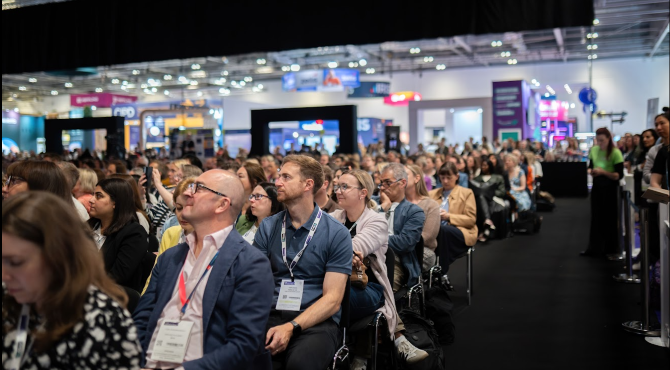
Flexible working has become one of the defining workplace issues of the post-pandemic era. If organisations get it right it’s an incredibly powerful and rewarding benefit for both employers and employees. When absent, or done wrongly, it’s a source of organisational tension.According to a CIPD report 80% of employees say that working flexibly has had a positive impact on their quality of life showing how it intersects with wellbeing and inclusion. While a third believe that working flexibly has had a positive impact on their career. In addition, it cites that 41% of employers link increased hybrid working with improved performance and efficiency.Despite the positive outcomes of flexible working, many organisations still remain trapped in an overly simplistic debate about office attendance. With the debate often framed as ‘back to the office’ versus ‘work from anywhere’ which can obscure the organisational challenge.In practice, there are multiple viable models, each with benefits and trade-offs across performance, collaboration, learning, culture, inclusion, wellbeing and cost.At the CIPD Festival of Work, a panel featuring Claire McCartney, policy and practice manager, resourcing and talent management, CIPD; Holly Birkett, director of the Work Inclusivity Research Centre and co-director of the Equal Parenting Project; Jo Carlin, chief people officer, Effective Energy Group and Emma Jayne, chief people officer, KYN, examined how employers can design better working arrangements that balance their needs with employee expectations.Rather than framing flexibility as a choice between office-based and remote work, panellists argued that organisations should focus on identifying the model that best supports their workforce and business objectives.

Subscribe to Relocate Extra, our monthly newsletter, to get all the latest international assignments and global mobility news.Relocate’s new Global Mobility Toolkit provides free information, practical advice and support for HR, global mobility managers and global teams operating overseas.
Different strokes for different folks
Flexibility does not have to mean identical arrangements for everyone either, said Carlin. “I've worked in all sorts of sectors for various companies and flexibility doesn't look the same for everybody. Equity isn't sameness and that's often what most organisations can centre on.”“You can give flexibility to people but it looks different for different people and you need to have those conversations. Face into it, don’t hide behind it, or worry if you can’t offer it. Flexibility isn’t sameness. Have those talks and don’t worry about all policies having to be the same,” she added.The discussion reflected a growing recognition that organisations need to move beyond blanket policies and instead develop frameworks that recognise differing job roles, operational requirements and employee circumstances.For some employees, flexibility may involve hybrid working. For others, particularly those in site-based roles, it may mean different start and finish times, shift patterns or other adjustments that provide greater control over work and personal responsibilities.“Some people might have to be physically present but you might be able to offer meaningful flexibility in other ways,” said Jayne. “Flexibility has to be fair but it doesn't have to be a one size fits all offering.”Read related articles
- Difference and collaboration take centre stage
- Five key workplace wellbeing trends to watch in 2026
- Bringing wellbeing and humanity back into recruitment
Structure, management and trust
While flexibility can support productivity, inclusion and employee engagement, speakers acknowledged that making it work requires careful design and ongoing management.Carlin warned organisations against becoming overly attached to a single model.“Guardrails and structure are important,” she said. “It can be fairly chaotic, or not quite working, and you have to be fine with noticing and saying that and adapting.”Her sage advice for employers was straightforward. Never be precious about the model. Treat everything like a beta mode.“Working life is changing. Don't be afraid to say it's not working. There are also things that happen before you see the raw data – keep close to that,” added Carlin.The ability to adapt, monitor and refine working arrangements was a recurring theme throughout the discussion. Panellists argued that flexibility should be viewed as an evolving organisational capability rather than a fixed policy.Carlin highlighted the importance of understanding how work gets done rather than focusing solely on attendance.“You have to design flexibility around the work,” she said. “Build it within your processes too and make sure your managers and teams have the ability to manage it.”The emphasis on management capability was echoed by Jayne, who described line managers as critical to successful implementation.“Empowering line managers is essential to make sure policy works,” she said. “They need the skills to listen and have those conversations.”As organisations review working arrangements and some leaders seek greater office attendance, tensions can emerge between organisational expectations and employee preferences.Concerns about hybrid working can also reveal deeper issues, suggested Jayne. “When it comes to hybrid or no hybrid – issues on that with leadership can sometimes be more about trust. If so, ask the right questions to help understand any fears around it.”Flexibility role models required
Birkett shared some research insights around flexible working and stressed that leadership behaviour has a significant influence on whether flexible working becomes embedded in workplace culture.Her top tip for leaders: “Role model the advantages of flexibility and be vocal about it, so people and line managers see it working,” she said.“It’s important for leaders at organisations to show and be proactive about how they've taken flexible working and how they're taking time to care for someone, or doing things differently.”Organisations may still find flexible working requires a cultural adjustment noted Birkett but these changes are to be expected.“I think we have to think more broadly about flexible working and what that is,” Birkett said. “There is quite a big cultural shift happening in terms of people's opinion on flexible working. It takes work and it takes adjustment.”The future of flexible working is unlikely to be defined by a single model. What is clear, is that organisations that lean into it, are prepared to review and adapt and create clear frameworks while equipping their managers to have open conversations are likely to come out on top.The impact of flexible and hybrid working in numbers61% of employers believe it is important for them to provide flexible working as an option when advertising jobs to attract staff and address skills or labour shortages91% of employers say they offer some kind of flexible working. Employees say they are most likely to make use of working from home in normal working hours (50%) and flexi-time (38%)Two-fifths of employers say that just some (28%) or only a few (12%) employees are able to work flexibly74% of organisations say they have hybrid working in place, reduced slightly from 84% in a similar CIPD survey in 2023. 65% of organisations require employees to be in the workplace a minimum number of days per week or month.41% of employers believe that an increase in hybrid working has led to increased productivity and efficiency in their organisation while 16% believe it has decreased it3% of employees say they have left a job in the last year due to a lack of flexible working, representing around 1.1 million workers in total.18% of employers have experienced an increase in flexible working requests since the introduction of the right to request flexible working30% of employees say they wouldn’t feel comfortable requesting formal flexible working (a change to a contract), and a similar proportion (31%) say the same about requesting informal flexibility (without a change to contract)Source: CIPD report Flexible and hybrid working practices in 2025 |

Find out more about the Think Global People and Think Women community and events.
Subscribe to Relocate Extra, our monthly newsletter, to get all the latest international assignments and global mobility news.Relocate’s new Global Mobility Toolkit provides free information, practical advice and support for HR, global mobility managers and global teams operating overseas.
©2026 Re:locate magazine, published by Profile Locations, Spray Hill, Hastings Road, Lamberhurst, Kent TN3 8JB. All rights reserved. This publication (or any part thereof) may not be reproduced in any form without the prior written permission of Profile Locations. Profile Locations accepts no liability for the accuracy of the contents or any opinions expressed herein.