How Cambridge School of Bucharest creates a culture of reading and sets children up for success
Research consistently supports the importance of reading for pleasure. Evidence reviewed by the UK’s Department for Education identifies positive associations with reading attainment, vocabulary, general knowledge, confidence and wider personal development. International research from the OECD has also found a strong relationship between enjoyment of reading and reading performance.
Building strong foundations
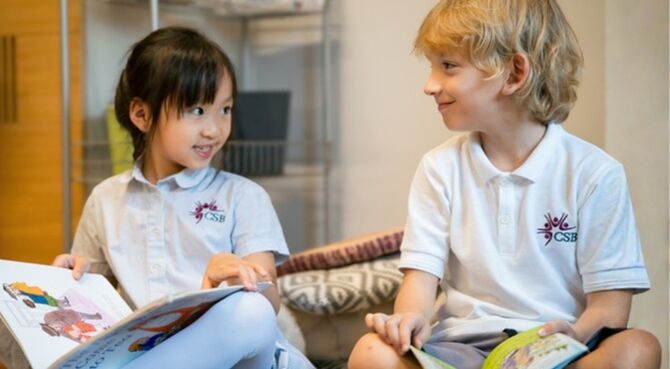
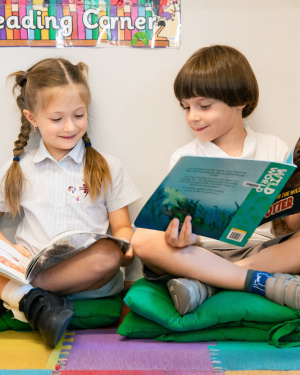
Children develop the foundations of reading through stories, songs, rhymes and conversations. At CSB, phonics is introduced in Nursery and continues through to Year 2, helping children recognise letters and sounds, blend words and build fluency. Alongside phonics, teachers read aloud and discuss stories to develop vocabulary, comprehension and curiosity. As children gain confidence, they progress from learning to read, to reading to learn, opening access to knowledge across the curriculum.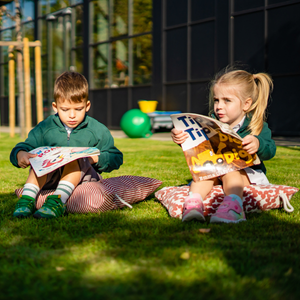
Encouraging independent readers
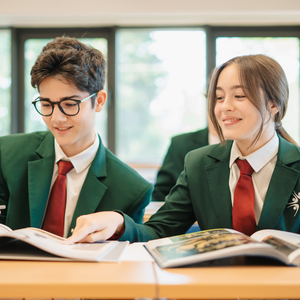
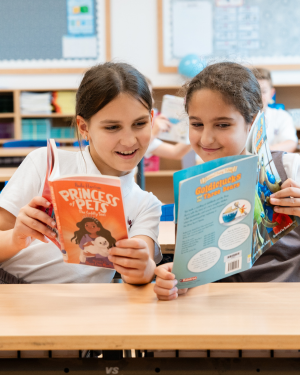
Weekly library visits give students the freedom to explore different authors, genres and subjects, supported by teachers who help them choose books that are both enjoyable and appropriately challenging. Alongside weekly reading targets, this combination of choice and guidance helps children establish positive habits, broaden their interests and become confident, independent readers. Reading brings students together through shared stories, classroom discussions and recommendations from teachers and friends. Reading aloud introduces children to new vocabulary and ideas, while conversations about books encourage them to express their opinions, consider different perspectives and connect with others.Celebrating books throughout the school
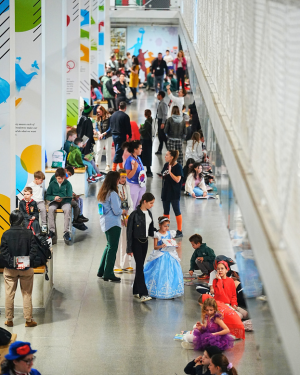
World Book Day is celebrated nationally across the world. At CSB, we extend this into World Book Week: a full week celebrating books and literature, with daily activities designed to inspire a love of reading among students aged 3 to 18. Book swaps, review competitions, social media challenges, bookmark design and guest author visits encourage students to discover new books and engage with literature creatively. The week concludes with a character dress-up day and a whole-school Drop Everything and Read (DEAR) session, bringing the entire CSB community together through reading.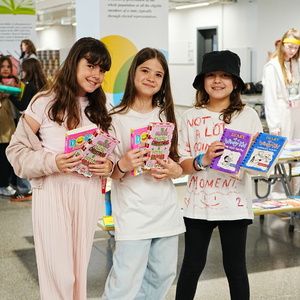

Working in partnership with families
Children often model the behaviour they see at home. CSB encourages parents to read in front of their children, share stories and talk about books together. Parent webinars and workshops, including sessions with guest speakers, offer practical guidance on building positive reading habits. During World Book Week, parents are also invited to take part in challenges, extending the celebration across the whole CSB community.A foundation for future success
Reading gives children access to the curriculum and helps them become informed, articulate and independent thinkers. The knowledge, vocabulary and critical-thinking skills developed through regular reading also support stronger examination outcomes in Secondary, whether students follow the A Level or International Baccalaureate Diploma Programme pathway. At Cambridge School of Bucharest, reading is treated as both an essential academic skill and a source of lifelong enjoyment. Through early phonics, regular access to books, weekly library visits, shared reading experiences, school-wide celebrations and close partnerships with families, students develop the foundations they need to succeed. A child who learns to love reading leaves school with more than strong literacy skills. They gain a lasting source of knowledge, imagination and opportunity that can continue to enrich their life long after their formal education has ended.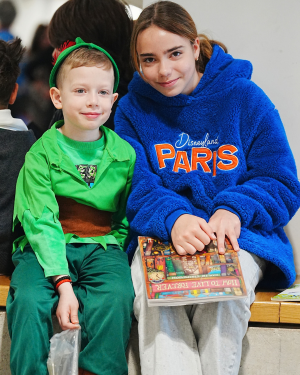
https://www.oecd.org/en/publications/2011/09/do-students-today-read-for-pleasure_g17a20a5.html ² Ofsted, School Inspection Update: Special Edition (January 2019): https://dera.ioe.ac.uk/id/eprint/32738/1/School_inspection_update_-_special_edition_January_2019.pdf
Visit Cambridge School of Bucharest's Featured School page
©2026 Re:locate magazine, published by Profile Locations, Spray Hill, Hastings Road, Lamberhurst, Kent TN3 8JB. All rights reserved. This publication (or any part thereof) may not be reproduced in any form without the prior written permission of Profile Locations. Profile Locations accepts no liability for the accuracy of the contents or any opinions expressed herein.